I'll preface this with a very important consideration - all of our stories are different. I'm sharing some of the things that have made postpartum really wonderful for us this time round, but there are so many factors not mentioned here that do have a huge impact. Our births, and the way we feel about how it went, is a really important factor in our postpartum. If you've had a birth experience that's made this time tough for you, I'm so sorry. And if you're looking for a space to process what happened, Birth Trauma Aotearoa is a really good place to start.
No matter how your experience has been so far, I do hope that in sharing what's been helpful for us in our second postpartum (which, at the time of writing, we're still in!), you can find some ways to make this season one of joy as you get to know your little one.
A side note, too: I'll be sharing lots of the things that were helpful for us, and including links to some of these. None of these are paid ads or anything of the like. Just stuff that we liked and fitted the needs of our family.
Must-have baby items...
If you're pregnant right now, I'm sure you would have seen many things advertised as "must-have" baby items. There's a tooooonne of stuff that promises to make your life easier (and a lot of it can be super helpful), but, honestly, most of it isn't all that necessary. There's very little you actually need for a new baby.
Here's what you will definitely need:
- A place for baby to sleep. Even if you plan to bedshare, it's important to have a separate, safe back-up option in case there's occasions where you don't meet the safe sleep seven.
- Milk. Breastfeeding, donated milk or formula. You don't even need to own a pump straight away (or ever, if you don't plan to pump). If you need one urgently, you'll be able to source one from a lactation consultant.
- Warm clothes to layer - cotton and merino are ideal
- Nappies and wipes, or an understanding of elimination communication
- A carseat (this can be a capsule, which will fit your baby for 6-12 months, or a carseat designed to be adapted to your baby from birth through toddlerhood)
Things I found helpful
If someone else had written this, it might look quite different. Our needs are diverse, and I write this not to suggest that this is the recipe for a good postpartum, but it was our recipe, and because I enjoyed it so much, I want to share it.
Education
With our first baby, my husband and I spent time on all the outward things - we planned and made a cute baby room, bought lots of lovely outfits, and chose the perfect pram for our lifestyle. We went to an antenatal course, and read a couple of books about birth. I never really thought to plan for postpartum - honestly, that part scared me, and I didn't know where to start. I hadn't grown up around young children and babies, had barely babysat, and I didn't even know how to change a nappy! There was so much we didn't know, and while there's always gonna be a bunch of learning on the go, there were things we could've educated ourselves on that would've been a huge help.
With our second baby, there was a lot we'd learned from experience, but I knew there was still so much I could learn to make our postpartum easier. I went to a breastfeeding seminar (there are currently none being offered in the Manawatū, but there is something in the works for this, and I'll update this post when it's up and running). I learned everything I could about safe sleep and bedsharing, so I could safely and intentionally bring our baby into the bed if I needed to. I also bought an online workshop by Dr Heather Johnston of Cradled about normal newborn sleep, so that I could have healthy, realistic expectations for my baby and understand what I could do to support his sleep. Baby Sleep With Ainslee has also recently released a free resource going over the basics, which you can download here. One of the best things I did (and still do) was attending the Manawatu Homebirth Association homebirth hangouts each month. I get to sit with so many wonderful women who share their wisdom around birth, postpartum and parenting young babies.
Another really important thing I did was curate my social media feed. There's so much information out there, and it's so easy to end up overwhelmed and confused. I am very intentional about the social media accounts I choose to follow, and have kept my newsfeed to accounts that provide newborn parenting information that is holistic, responsive, and fits the style of parenting that sits well with our souls. I do think there's a place for listening to a range of perspectives, including ones that we don't agree with, but for me, postpartum is not the time.
Instinct
My goodness... If I could talk to myself as a first-time mama, the first thing I would say is to trust my instincts. Education is helpful, but at the end of the day, we know our babies best. I looked at so much conflicting advice as a first time mum, that for a while, I couldn't even find my instincts. I tried things that felt so unnatural to me, and both mine and my husband's mental health suffered for it. It wasn't until I cut out the noise, found what worked for us, and went with it, that I felt settled in what we were doing. If something doesn't sit well with you, you don't have to do it, or stick with it. It sounds perhaps a bit cliche, but trust your intuition!
prioritising my Sleep and rest
It sounds wild to say, but as I type this, three months postpartum, I can genuinely say that I'm relatively well-rested, and have been since the day my son was born. There are definitely things that have helped that were out of my control - I had a full night's sleep just before my son's birth, woke up at 6.30am in labour and had him by 9am. He's also a pretty relaxed baby. But, just like many (well, probably most) newborns, he wakes up regularly through the night, and he doesn't sleep well unless he's either on me, or very close to me. I have him in on me in a baby carrier as I type this.
In, on, and around the bed
I was very fortunate to have my husband home with us for five weeks after our son's birth, and I know that, sucky as it is, a lot of families don't have this privilege. With him home to care for our toddler, I was able to spend the first two weeks in bed, slowly venturing out to the living room in the second week when it felt comfortable. Our church admin organised a meal train, so every second night for two weeks, we had someone arrive with food. Every second night was actually ideal too, cause there were often leftovers to eat the next day. My husband brought all my food to me on a tray, so I could continue to rest and be on a soft surface while I ate. We also had dear friends and family who took our toddler out a few mornings each week, which gave my husband a chance to rest, too.
Sidecar cot with changing supplies
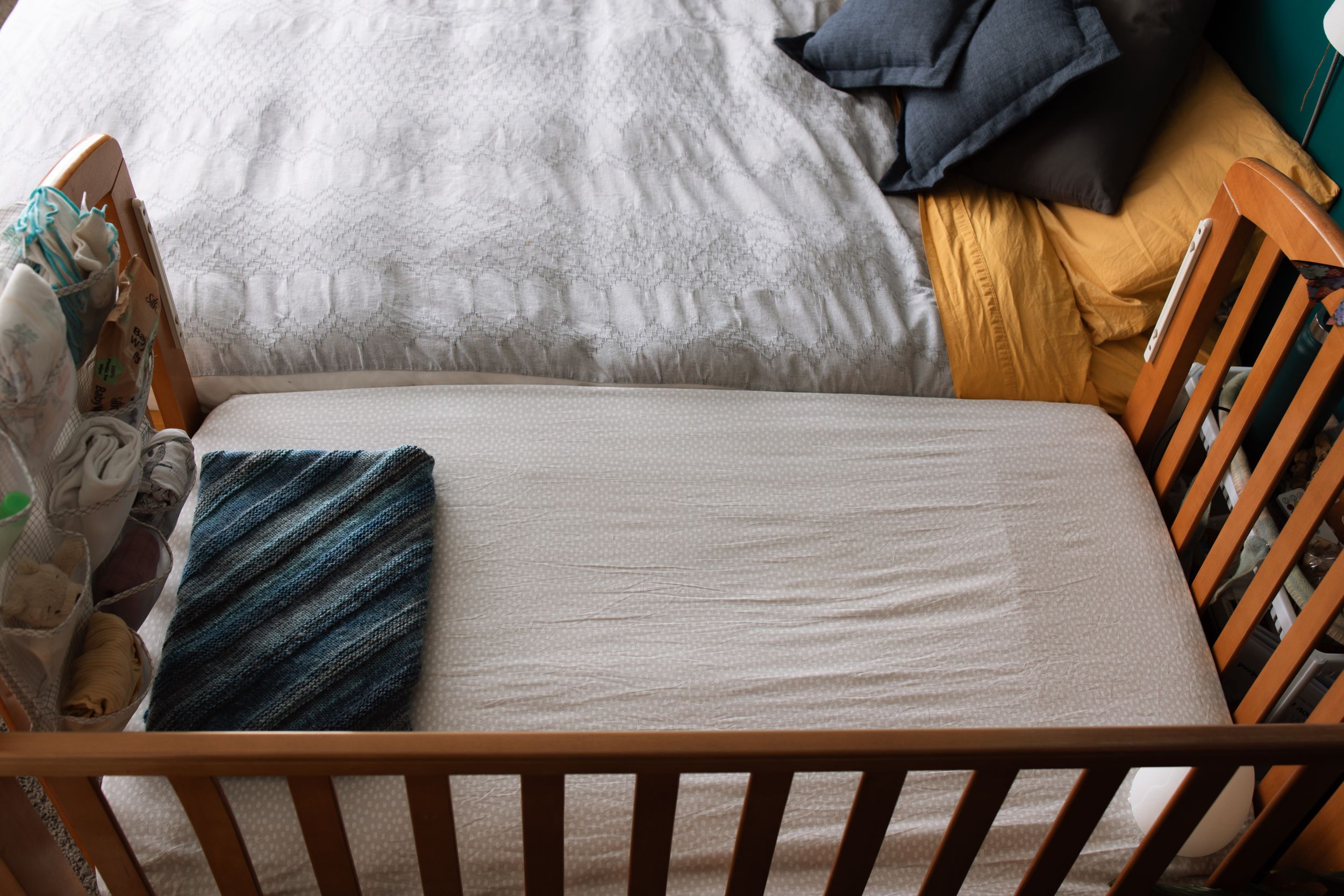
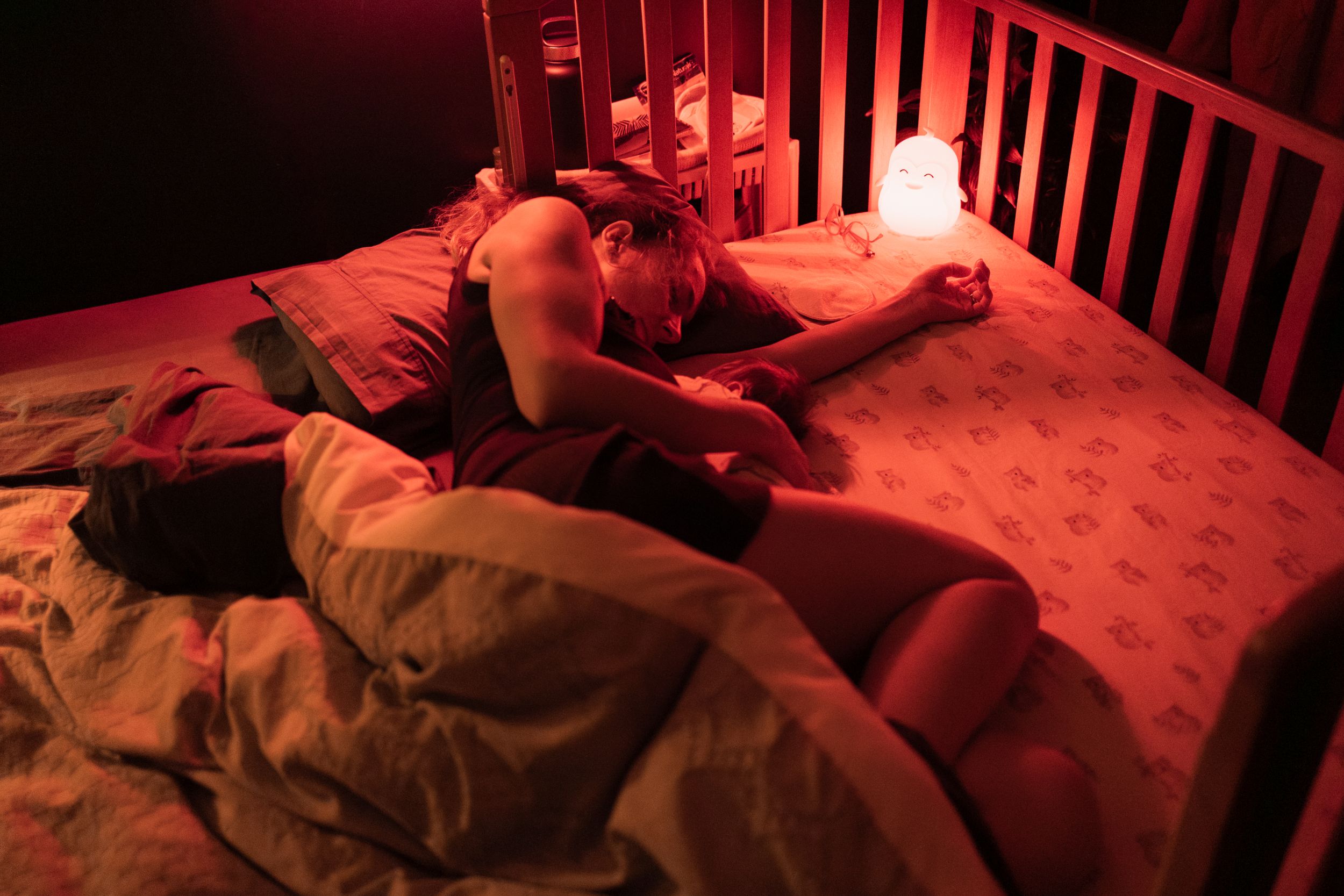
Having the cot connected to the bed as a sidecar was, and still is, the biggest help to us. Our mattress isn't quite firm enough to safely co-sleep with our baby in the bed, so having the cot attached means that we still have a continuous surface to share, I can breastfeed side-lying with my body as far into the cot as needed, and I can move away when I want to.
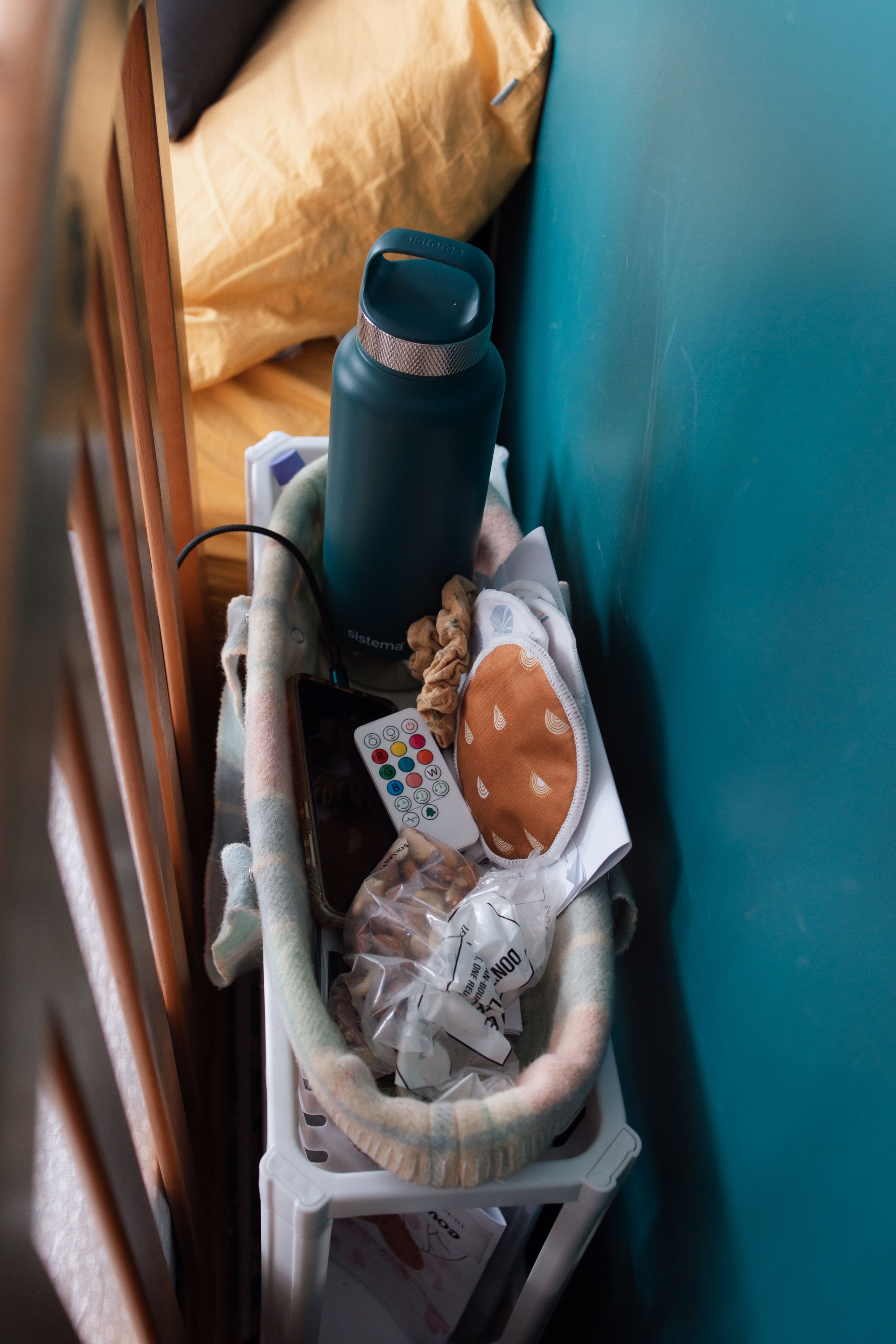
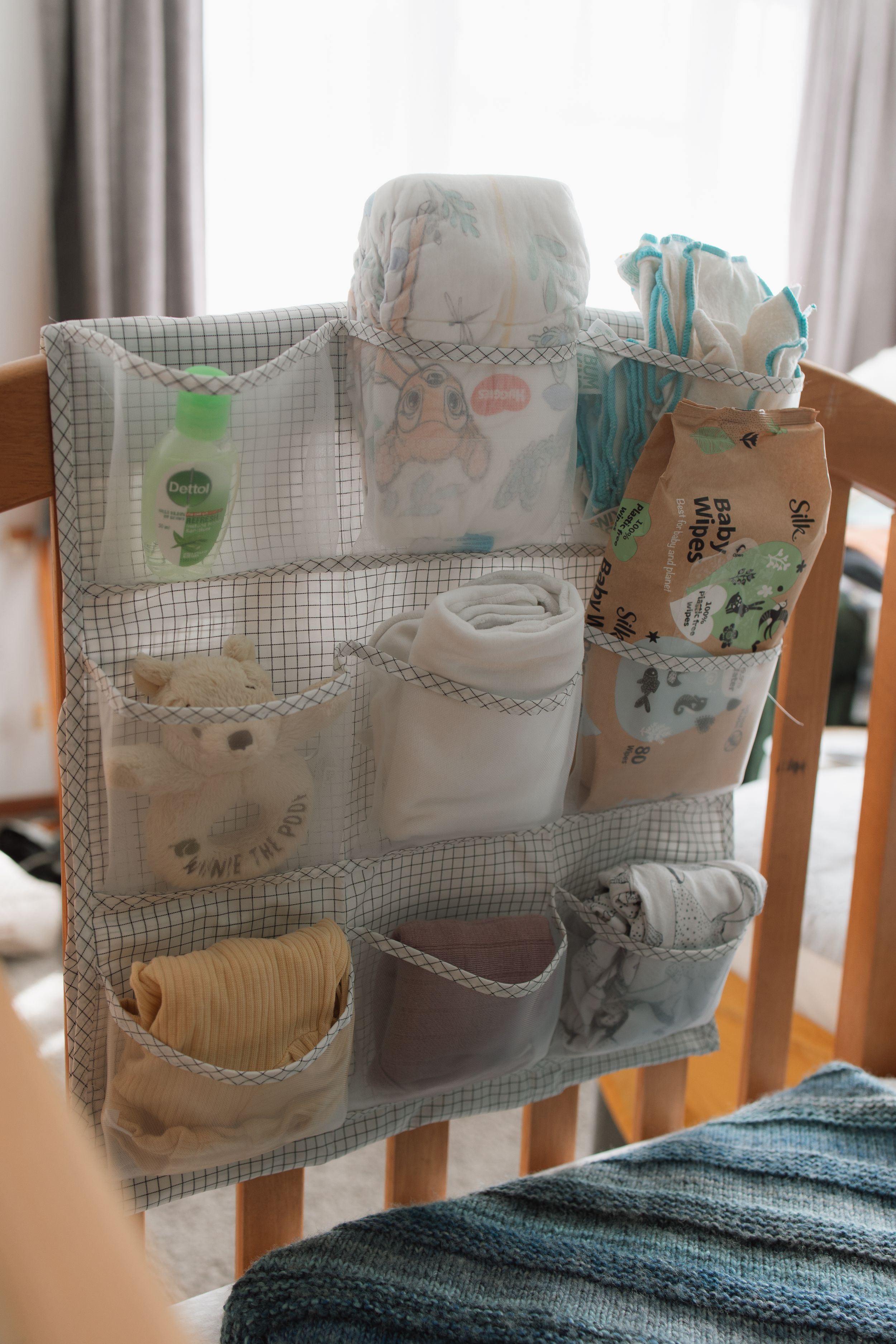
I also set up a small area of changing supplies at the end of the cot. I'll be removing this once our baby is more mobile and at risk of knocking it, but for now, it's great to be able to change him without leaving the bed. We actually don't have a change table at all this time, and we haven't felt like we need one. Things we have in the change station are:
- Nappies
- Wipes
- Hand sanitiser
- Burp cloths
- Changes of clothes
- Washable puppy pad (a waterproof puppy pad would also work well)
Minimising stuff to do
Swaddling is optional. Changing nappies at every feed even when there's no poo is optional. Using a hot water bottle to heat the baby's sleep space is optional. These might help with baby's comfort, but they might not really make that much difference. We haven't done any of the above this time, and it's been lovely not having all this extra stuff to do when we could be sleeping.
red light, no phone in the night, and side-lying feeding
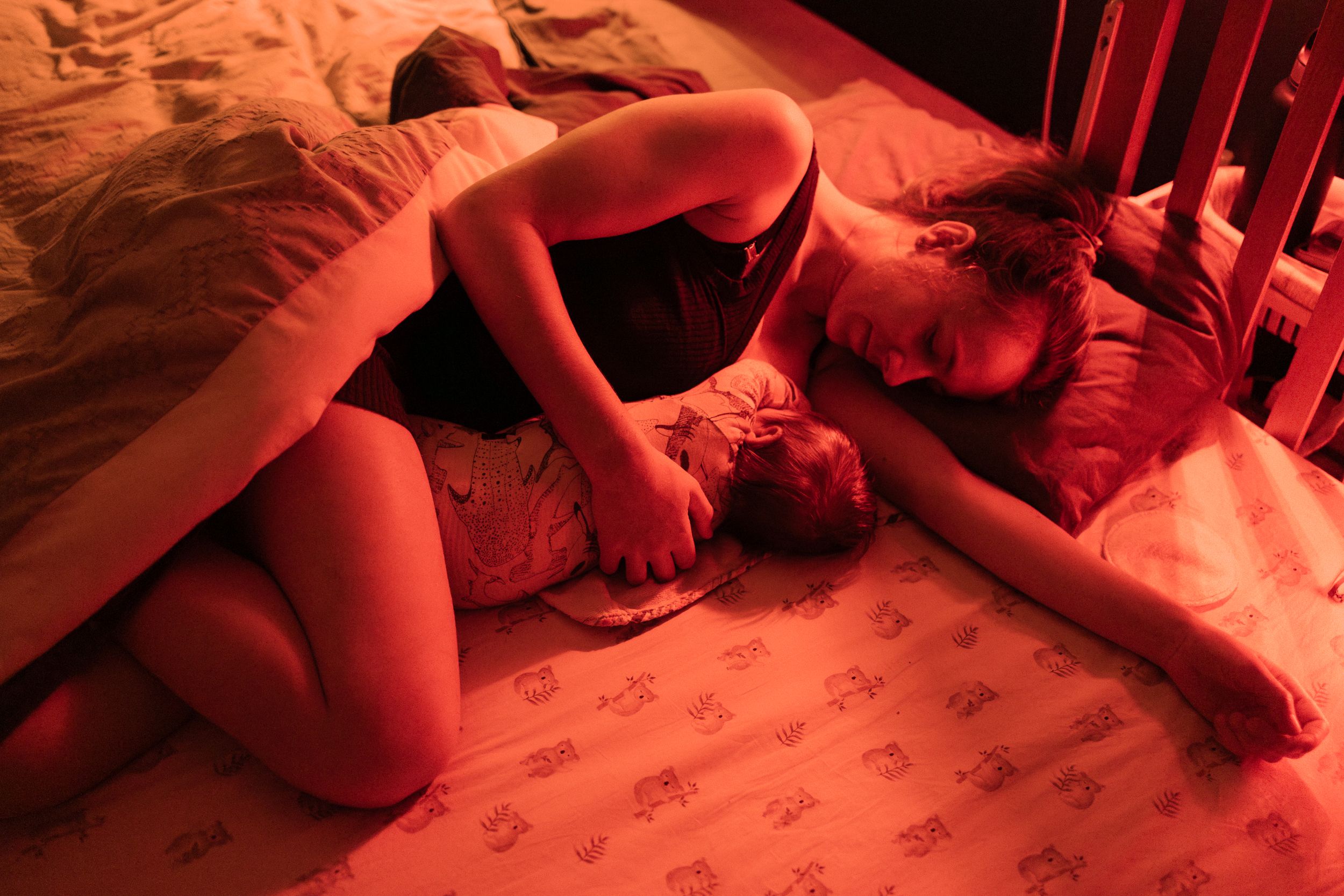
Side-lying breastfeeding has been wonderful for us. I didn't even know it was a thing with my firstborn! There were so many occasions where I'd nod off while breastfeeding sitting up, which wasn't safe, but I was SO exhausted I just couldn't stay awake. This time, especially with the sidecar cot set-up, I've been able to safely doze while I feed lying down in a cuddle curl position, and if I fall asleep, my baby is safe.
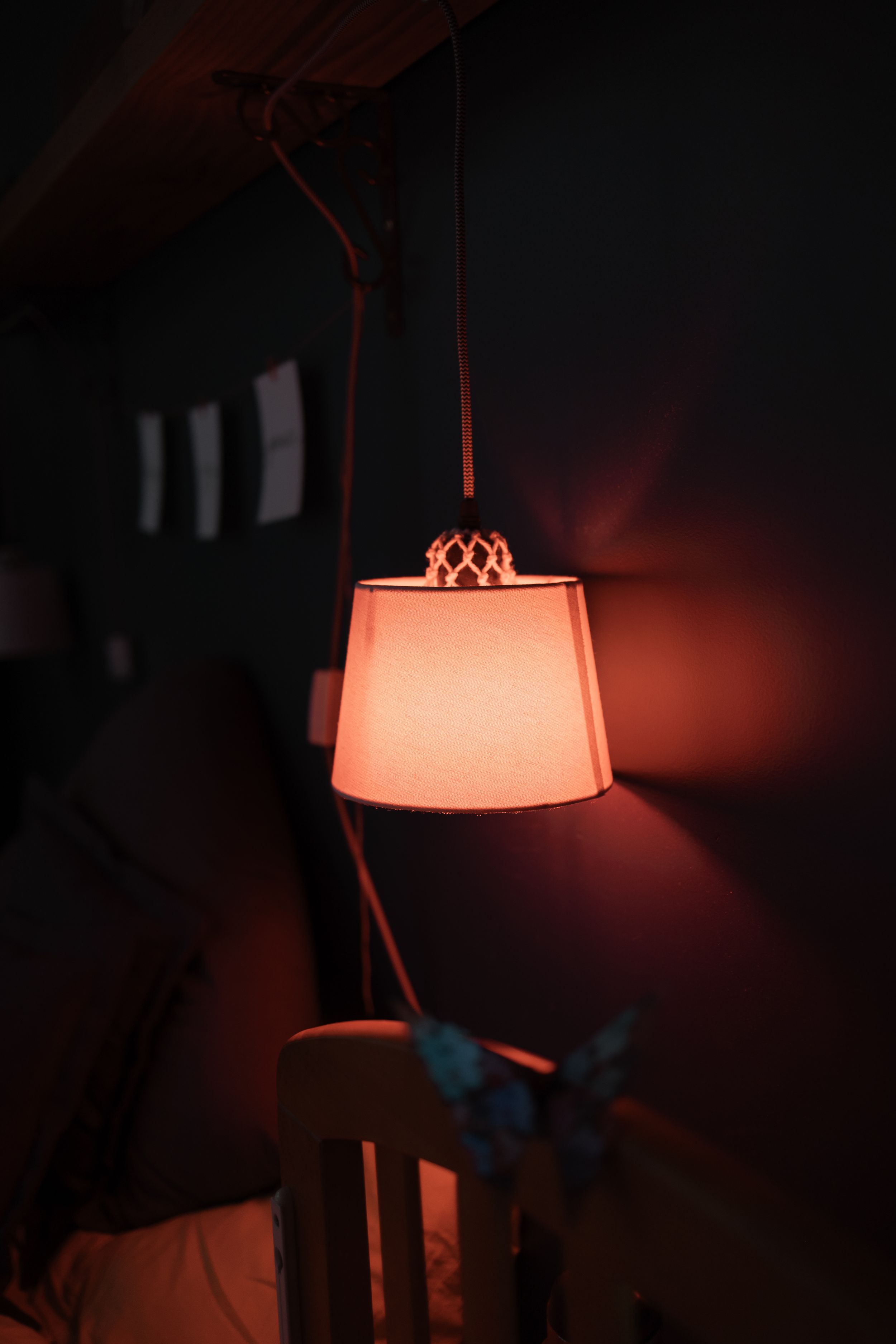
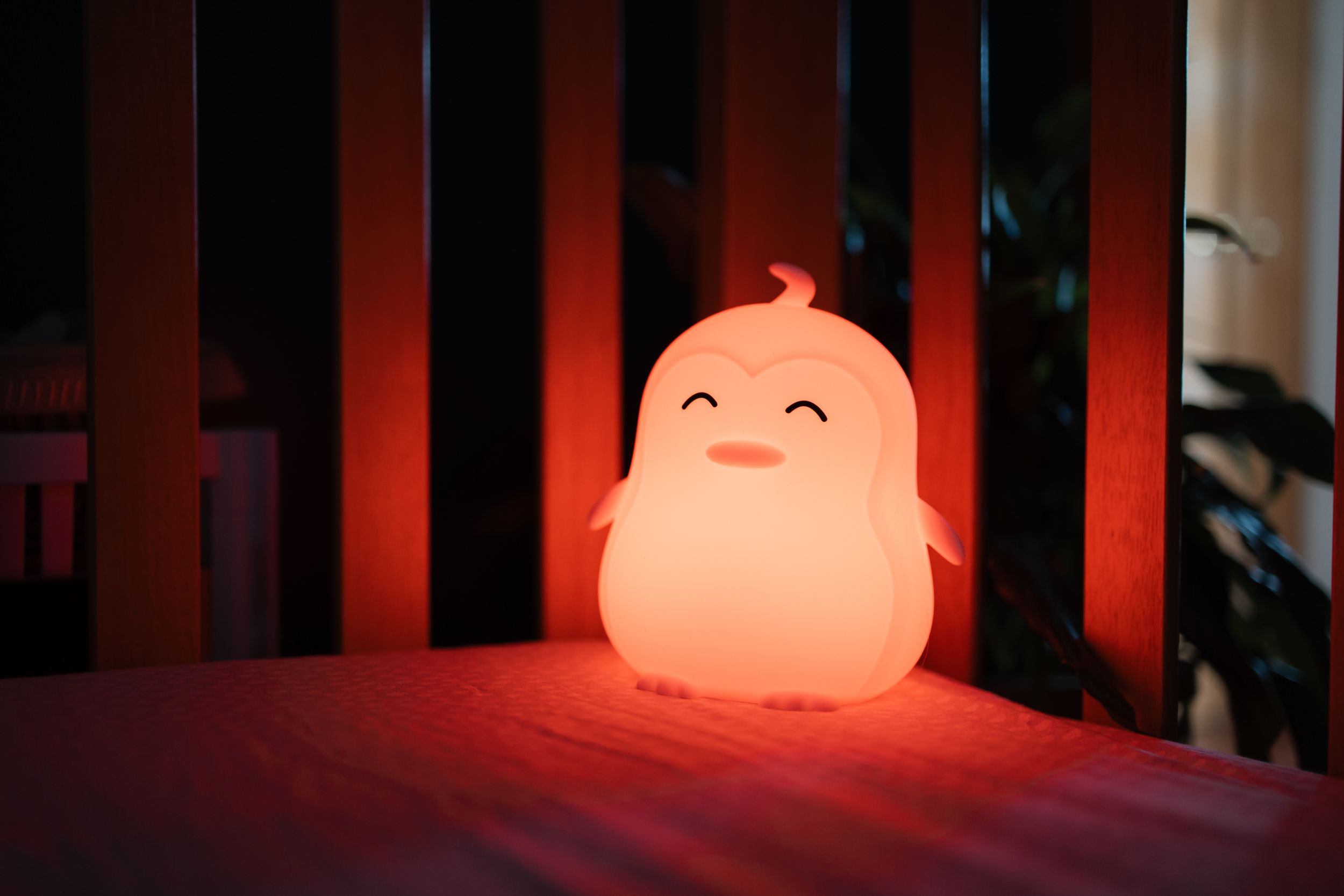
I've also used a red nightlight so I can still see when I latch him. It doesn't interfere with melatonin production like a white or even y, so both my husband and I are easily able to get back to sleep (if he even wakes up!) I avoid using my phone overnight, so my brain gets to stay lovely and sleepy.
I know that a side-lying breastfeeding position doesn't work well for everyone, and for some, sitting up scrolling or reading is the only way to stay awake and safely breastfeed. Using a red colour filter in your phone's settings may be helpful to minimise the wakefulness you might get from using a phone (although I have read it's more about the wavelength of the light than the colour, so maybe take that with a grain of salt!)
skin-to-skin/Chest time
Skin-to-skin is beneficial beyond just the day of birth. You've probably heard of the benefits for connection, building a baby's immune system, helping with establishing breastfeeding, oxytocin production and more. But something I've noticed as I've held my baby on my chest, regardless of whether we're clothed or skin-to-skin, is the regulation that having a baby on my chest brings me. There have been countless times where I've noticed myself feeling a bit overwhelmed, but once I have the deep pressure of laying back with my baby on my chest, I feel more grounded, cozy and settled.
faith, counseling, and hope, joy and peace
This, for our family, has been the most important part. It would be remiss to share about what made postpartum so good for us without sharing about the part God has played in it all. Our first postpartum was really tough. We didn't know it at the time, but realised in hindsight that my husband had had depression. The decision to have a second baby was big, and came with a bunch of fears and thoughts of, "what if it's like it was last time?"
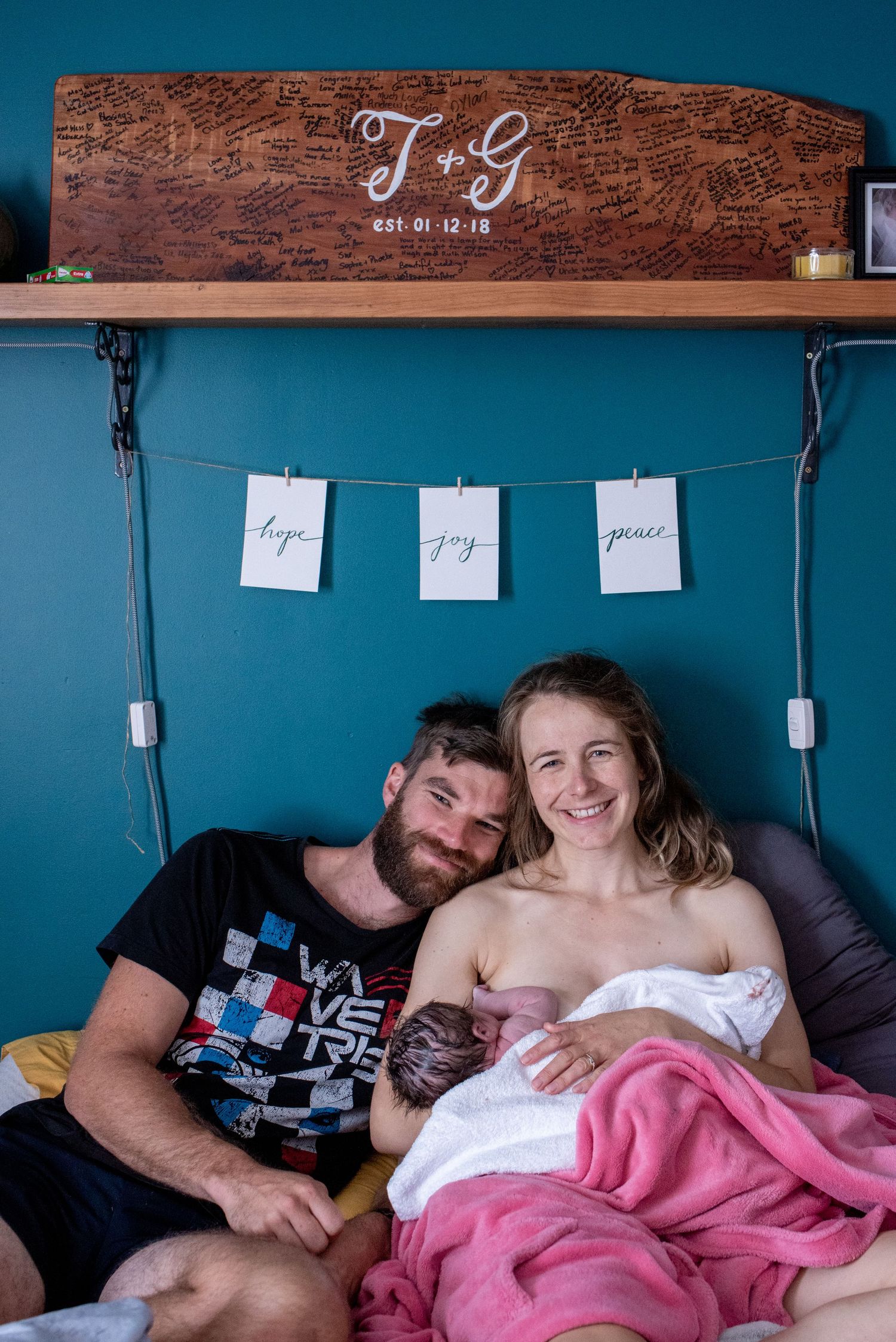
I can't remember exactly when the words came to me, but it was some time early in my pregnancy. Hope, joy, and peace. I clung to those words throughout my pregnancy, and would cry to God when it felt hard to rest in them. I painted them on cards and hung them above our bed, and late in my pregnancy, I learned that there was a bible verse with all of them, in Romans 15:13 - "May the God of hope fill you with all joy and peace as you trust in him, so that you may overflow with hope by the power of the Holy Spirit." I cried when I heard it read. One of my favourite photos from our birth is of our family sitting on our bed, our baby only a couple of hours old, under those three words.
My husband also sought counseling as I neared the end of my pregnancy. This has made a huge impact on our experience this time, and I'm incredibly grateful. It gave him a chance to discuss his worries and to learn skills to cope if he notices that he's beginning to struggle.
Lastly, a song. Peter, by Te Rautini, a song about stepping into the unknown, knowing that God sustains.